
Amsterdam has a long relationship with ceramics.
The Dutch Golden Age made blue-and-white Delftware famous around the world, and the city’s museums still hold remarkable collections of tiles, vases and tableware.
Today that heritage lives on in a very different way: in shared studios, evening classes and weekend workshops where beginners sit at a wheel for the first time.
If you have been thinking about trying pottery in Amsterdam, this guide explains the main options, what to expect, and how to choose a class that suits you.
Key Takeaways
- Taster workshops are the easiest way to try pottery without a big commitment
- Multi-week courses build real skills in throwing, handbuilding and glazing
- Open studios and memberships suit people who already know the basics
- Cultural and community centres are a good place to look for affordable classes
- Allow time: work needs to dry, be fired, glazed and fired again before you take it home
The Three Main Ways to Start
Taster Workshops
A one-off workshop, often two or three hours long, is the gentlest introduction.
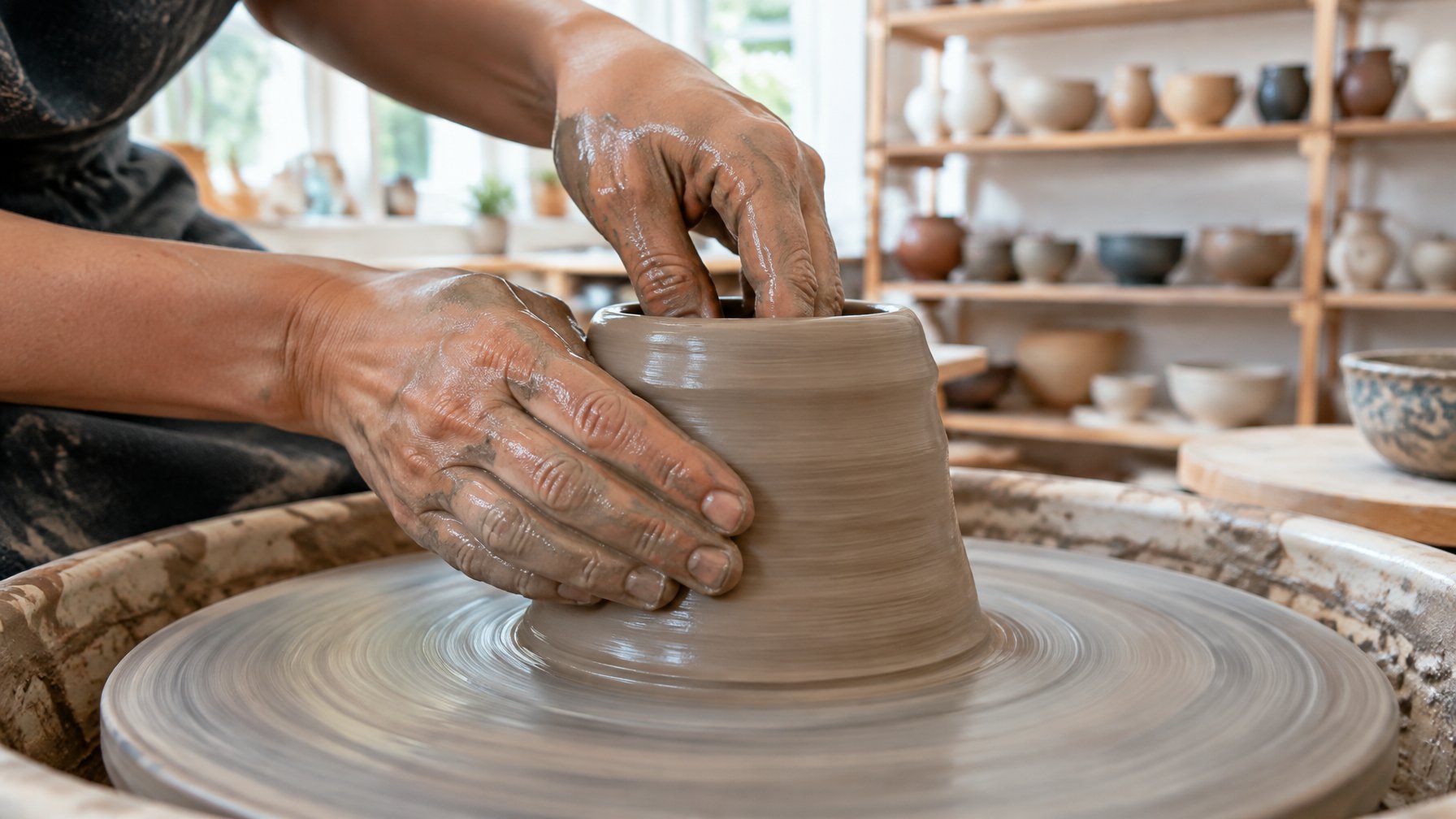
You usually get a short demonstration, time on the wheel or with handbuilding techniques, and help from an instructor.
These are popular as date nights, birthday outings and team activities.
Keep expectations relaxed.
Your first bowl may be lopsided, and that is part of the fun.
Multi-Week Courses
If you enjoyed a taster, a course is the natural next step.
Over several weeks you learn to wedge, centre, throw and trim, and you see the full process from raw clay to glazed piece.
Courses often cover both wheel throwing and handbuilding methods such as pinching, coiling and slab building.
Open Studios and Memberships
Once you can work independently, some studios offer open access for members.
You pay for time in the studio, clay and firing, and work at your own pace.
This suits people who want to practise regularly and develop their own style.
Look Beyond Dedicated Pottery Studios
Ceramics classes are not only found in specialist studios.
Amsterdam’s cultural centres and community venues often host creative courses, from ceramics to drawing and printmaking, sometimes at lower cost and with a strong neighbourhood feel.
They are also great places to meet people who share your interests.
Essentially Amsterdam’s guide to Amsterdam’s cultural centres is a useful starting point for finding these venues, many of which run workshops, talks and creative programmes throughout the year.
What to Expect at Your First Class
- Clothing. Clay gets everywhere.
Wear old clothes, short or rolled-up sleeves, and closed shoes.
- Nails and jewellery. Short nails make wheel work much easier.
Remove rings and bracelets.
- Hair. Tie back long hair so it stays clear of the wheel.
- Timing. Arrive a little early so you are not rushed.
- Patience. Centring the clay is the hardest part for beginners.
Everyone struggles at first.
Understanding the Process
One thing that surprises beginners is how long it takes before they can bring a piece home.
Ceramics follows a series of stages:
- Making. Throwing on the wheel or building by hand.
- Drying to leather-hard. The clay firms up enough to trim and add handles.
- Bone dry. The piece dries completely before firing.
- Bisque firing. The first kiln firing turns clay into ceramic.
- Glazing. You apply glaze, which looks very different before it is fired.
- Glaze firing. The second firing melts the glaze into a glassy surface.
Depending on the studio’s kiln schedule, this can take several weeks.
Ask when your pieces will be ready and how collection works.
Choosing the Right Class
Before you book, ask:
- How many students are in each group, and how many wheels are available?
- Is clay, glazing and firing included in the price?
- Are classes taught in English if you do not speak Dutch?
- Can you take your finished pieces home, and when?
- Is there a make-up session if you miss a week?
Smaller groups mean more time with the teacher, which matters most at the beginning.
Finding Inspiration in the City
Amsterdam is a rewarding place for anyone interested in ceramics.
The Rijksmuseum holds a famous collection of Delftware, and design museums and galleries show contemporary ceramics alongside other crafts.
Markets and design shops often sell work by local makers, which is a lovely way to see what is possible once you have more experience.
Looking closely at finished pieces teaches you a lot: how a rim is finished, how a handle joins a mug, and how glazes pool and break over edges.
Pottery as a Way to Unwind
Many people take up pottery because it slows them down.
Working with clay demands your full attention, and the result is often a calm, focused hour away from screens.
Add the satisfaction of using a mug you made yourself, and it is easy to see why classes fill up.
Frequently Asked Questions
Do I need experience to join a pottery workshop?
No. Taster workshops and beginner courses are designed for complete newcomers.
How long until I get my pottery back?
Usually several weeks, because each piece needs to dry and go through two firings.
Wheel or handbuilding: which should I start with?
Both are rewarding.
Handbuilding is often easier at first, while the wheel takes more practice but is very satisfying once it clicks.
Whichever route you choose, the best advice is simple: book a class, get your hands dirty, and enjoy the process as much as the result.